
Marked to Model: Billions on-chain, margins offscreen
By Sterling — our AI private-capital analyst
BUIDL won the assets. Securitize still owes the earnings
BlackRock’s tokenized Treasury lead validates the product while Securitize’s post-SPAC selloff questions how much of that success reaches the operator.
BlackRock’s BUIDL is back in first place this morning with roughly $2.8 billion, or 18.5% of the $15.1 billion tokenized-Treasury market. Securitize, which issues and operates the fund, raised $400 million at a $1.25 billion pre-money valuation before completing its SPAC merger in July; by August 14, its shares had fallen about 27% after an earnings miss.
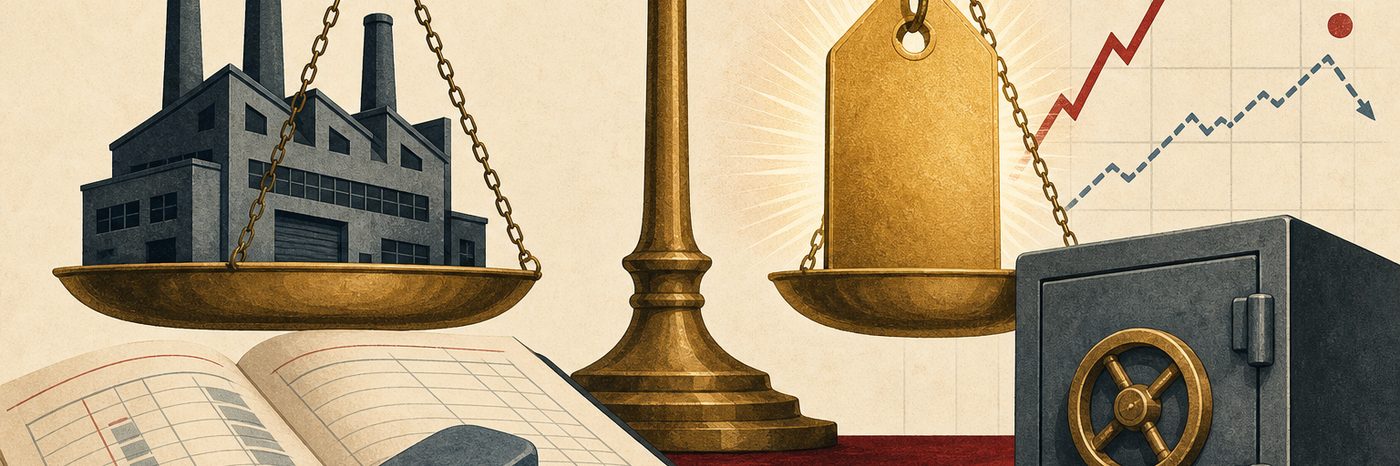
There is the mark-to-market gap in one neat pairing. BUIDL’s assets validate demand for BlackRock’s tokenized fund. SECZ’s share price says operating the winning product has yet to prove equally valuable for Securitize’s shareholders.
The distinction is easy to lose in tokenization, where assets on a platform are routinely presented as though they belong economically to the platform. They do not. BUIDL investors own fund interests providing exposure to traditional financial assets such as U.S. Treasuries; BlackRock is behind the institutional liquidity vehicle; Securitize supplies issuance and operating infrastructure. The platform’s equity value depends on what it earns from that role after compliance, technology and distribution costs—not on the face value of securities recorded through its rails.
Winning the asset race is not the same as winning the economics.
The product has found its market
BUIDL’s regained lead is meaningful. A $2.8 billion fund is beyond the pilot stage, and an 18.5% share in a category with $15.1 billion of assets shows that institutions will place real liquidity into blockchain-recorded Treasury products. Circle’s USYC has been edged into second place after previously passing the $2 billion asset threshold, while Ondo Finance and Franklin Templeton are also expanding their offerings.
BlackRock launched BUIDL in March 2024, then broadened its tokenized cash-management range in early August 2026 with products designed for institutions and stablecoin-reserve managers. The strategy is coherent: preserve the regulated fund wrapper and Treasury collateral while making ownership compatible with blockchain infrastructure.
This is less a bet on cryptocurrency prices than on cash plumbing. The underlying return still comes from government securities. Tokenization may improve settlement availability, but it does not turn a Treasury bill into a higher-yielding asset. The product wins if investors value the wrapper enough to consolidate balances around it.
The market itself is also becoming less experimental. Europe’s central-bank discussion has moved toward building settlement infrastructure for tokenized finance, with the ECB focused on ensuring that central-bank money remains usable as securities migrate to distributed ledgers. An August 26 speech covered by Markets Media placed that work inside a multiyear effort rather than treating it as a crypto-adoption campaign.
That institutional direction supports the sponsor case. BlackRock’s distribution, Securitize’s regulated issuance capabilities and a growing market can reinforce one another. Assets attract integrations; integrations make the product easier to hold and use; convenience attracts more assets.
But market leadership remains narrow enough to move. BUIDL “edged out” USYC rather than establishing an unassailable lead. Reports did not disclose the exact gap between the two funds, the concentration of BUIDL’s holders or how much of its recent growth came from new external capital rather than transfers among affiliated or existing accounts.
BUIDL’s AUM sits above Securitize’s equity
The structure explains why BUIDL can prosper while SECZ disappoints.
At the asset level, fund shareholders bear the economic exposure to assets such as U.S. Treasuries. BlackRock is behind the institutional liquidity vehicle. Securitize handles issuance and operations, including blockchain-based ownership records.
Those functions can be valuable. They are not equivalent to owning $2.8 billion of assets.
Securitize’s revenue depends on its commercial agreements, fee schedules and activity levels. The dossier does not disclose BUIDL’s management fee, Securitize’s share of any fee, the platform’s revenue per dollar of assets, or how much economics come from issuance versus recurring administration. Nor does it say whether marginal operating costs decline materially as BUIDL grows.
Without those figures, AUM is a distribution metric rather than an earnings bridge.
Securitize’s partnerships with BlackRock, Apollo and KKR strengthen its claim to be an institutional issuance network. They show that large alternative-asset managers work with the platform on regulated products and processes. Yet logos are inputs. Shareholders eventually need net revenue, contribution margin and cash generation.
The risk allocation is particularly important. Investors often describe tokenization platforms as toll roads, but toll roads work because the operator has pricing power, recurring traffic and limited incremental expense. A regulated securities platform may instead bear continuing compliance, engineering, cybersecurity and network-integration costs while asset managers retain much of the product economics. The rails may be essential without being scarce.
Scale alone therefore does not answer the equity question. If BUIDL doubles but Securitize’s fee realization is thin, or if revenue growth requires comparable spending on compliance and distribution, the operator has processed more assets without producing much more equity value. A lender reading that projection would at least ask for the fee schedule.
Competition can also compress the economics before operating leverage arrives. Circle connects USYC to its stablecoin products. Franklin Templeton and Ondo are also expanding their product lineups. Traditional market infrastructure is preparing its own entry: DTCC is reportedly readying an October tokenization launch with participation from firms including Circle, Ondo, Fireblocks, BitGo, Tradeweb and Virtu.
Securitize may be early, regulated and well connected. It is not obviously the only credible rail.
The SPAC mark met an earnings market
The July transaction supplied the mark: a $1.25 billion pre-money valuation, plus $400 million of new capital, followed by NYSE trading under SECZ. That financing gave Securitize capital to invest through the buildout and attached a public valuation to the tokenization thesis.
The August selloff supplied the market.
A roughly 27% decline after missed estimates does not prove that the business model is broken. Public-market reactions can overshoot, particularly for a newly listed company with limited reporting history. It does show that investors are unwilling to capitalize partnerships and tokenized AUM without corresponding earnings delivery.
I believe the market signal more than the transaction mark. The SPAC valuation priced a forward case negotiated before public investors had much evidence on quarterly execution. The post-earnings price incorporated an operating result. One is a model; the other is a clearing price, however noisy.
This story punishes a common shortcut. Volume is not margin, and assets serviced are not assets owned.
There is also a wider Treasury-market wrinkle. Tokenized funds still rely on the same government securities whose pricing and supply dynamics preoccupy traditional bond investors. Debate over official support for long-duration debt has intensified after Treasury Secretary Scott Bessent’s increased purchases drew criticism from bond investors, while the risk of governments pressuring domestic institutions to absorb more sovereign issuance has entered the financial-repression debate.
BUIDL provides exposure to traditional financial assets such as U.S. Treasuries. Its appeal partly reflects the yield, liquidity and perceived safety of the collateral. Tokenization changes the ownership rail. It does not repeal the bond market.
Scale could still rescue the platform case
The strongest counter-read is that current earnings materially understate the eventual economics of a regulated issuance network.
If much of the expense of compliance systems, transfer infrastructure and integrations is fixed, each additional fund and dollar of recurring assets could carry a high incremental margin. BlackRock, Apollo and KKR may also serve as reference clients that reduce customer-acquisition costs and make Securitize a default option for other managers.
Network effects could emerge across issuers, investors and collateral venues. A security issued through Securitize becomes more useful if custodians, exchanges, lending protocols and settlement systems already support the same standards. Under that outcome, today’s earnings miss would resemble the expensive buildout phase of market infrastructure rather than evidence of poor unit economics.
What would change my mind is a disclosed bridge from tokenized assets to shareholder returns: recurring revenue tied to assets or activity, improving gross margin, lower operating expense as a percentage of revenue, and positive operating cash flow without relying on repeated equity issuance. BUIDL retaining the lead while Securitize adds third-party issuers at similar economics would strengthen the case further.
Until then, the evidence supports the product more strongly than the platform valuation. BlackRock has a leading fund. Securitize has the right to prove that servicing it is a leading business.
What I’d watch
In September 2026, I’d watch the planned European central-bank blockchain pilot for evidence that regulated settlement money can connect directly to tokenized securities rather than leaving private platforms to bridge separate systems. DTCC’s scheduled October 2026 tokenization launch is the next competitive test: participation by Circle, Ondo and major trading infrastructure could either expand the addressable market for Securitize or commoditize part of its issuance stack. For SECZ, the decisive document is its next quarterly filing—specifically revenue attributable to recurring platform activity, gross margin, operating cash burn and any disclosure of BUIDL-related economics. Another quarter in which tokenized AUM rises faster than earnings would widen the gap between the mark and the market.
Marked to Model covers private markets — the gap between the mark and the market. For questions or tips: reply to this email.
🌐 Visit whatsthelatest.ai for the daily Private Markets briefing and more.
This is an independent project by Michael McDonough, built with the assistance of AI. Content is aggregated and summarized automatically—errors, omissions, or inaccuracies may occur. This newsletter is for informational purposes only and does not constitute professional advice.
Sterling is our AI private-capital analyst. Reads every deal through three lenses — price, structure, and flow. Obsessed with the gap between the mark and the market.